Tennis Progression Pathways
This module details the sequence of racket skill acquisition within a controlled, multi-sport framework. It provides instructions on decoupling technical development from immediate match results.
Establish the Multi-Sport Mandate
Specialisation in tennis at an early phase frequently results in asymmetrical physical development and overuse injuries in the dominant shoulder or wrist. The standard operating procedure requires participants to engage in complementary sports.
For example, participation in a team sport such as football develops spatial awareness and lower-body agility, while cross-country skiing builds the requisite aerobic base without placing impact stress on the joints. You must schedule tennis-specific training to accommodate, rather than override, these secondary disciplines.
Isolate Technical Mechanics
During the acquisition phase, instructors are required to isolate components of the stroke mechanics rather than assessing the participant's ability to win points.
2.1 Setup controlled feeding drills where the ball trajectory and pace are predictable.
2.2 Measure the participant's ability to execute correct kinematic sequencing (e.g., initiating the forehand rotation from the hips before the upper torso).
2.3 Correct mechanical flaws repeatedly before introducing variables such as unpredictable ball spin or placement.
2.4 Delay tournament entry until the mechanical foundations are stable enough to withstand the stress of competitive match play without regressing to poor habits.
Utilise Indoor Facility Infrastructure
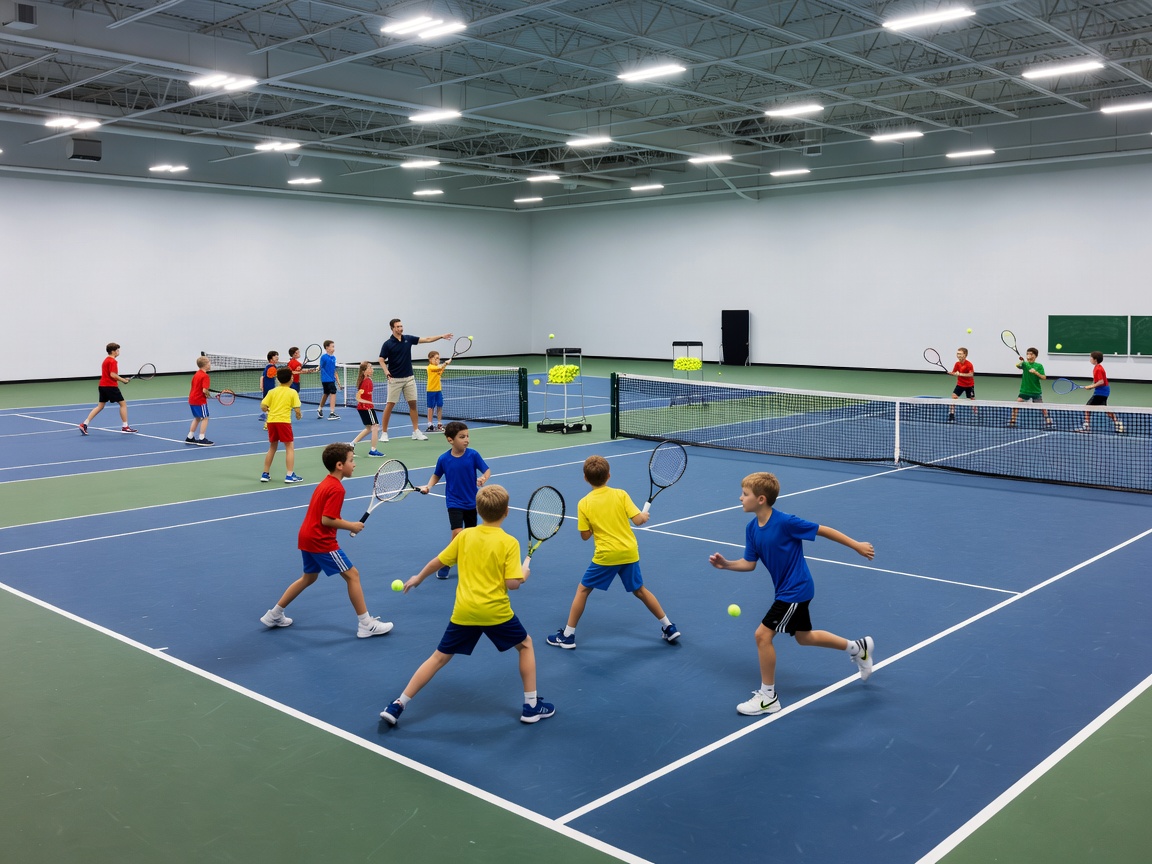
Due to severe climate constraints, reliance on outdoor clay or grass courts is operationally impossible for the majority of the annual cycle. The infrastructure model dictates the use of community-owned indoor hardcourts.
This provides a highly controlled environment. The surface speed and bounce height remain absolute constants. When assessing development pathways, recognise that this environmental consistency allows for higher precision in technical adjustments compared to navigating the variables of wind, sun, and irregular surface conditions.
Implement Data-Driven Adjustment
In the transition to the advanced development phase, qualitative assessment is augmented by quantitative measurement. High-speed camera systems and sensor technology are employed to measure racket head speed and spin rates.
The instructor's role shifts from a demonstrator to an analyst. You must evaluate the data output against physiological load parameters to ensure that the pursuit of higher velocity does not exceed the structural capacity of the participant's tendons and ligaments.