Golf Training Mechanics
This module outlines the procedures for acquiring advanced technical proficiency in golf through the systematic use of indoor launch monitors and bio-mechanical data processing.
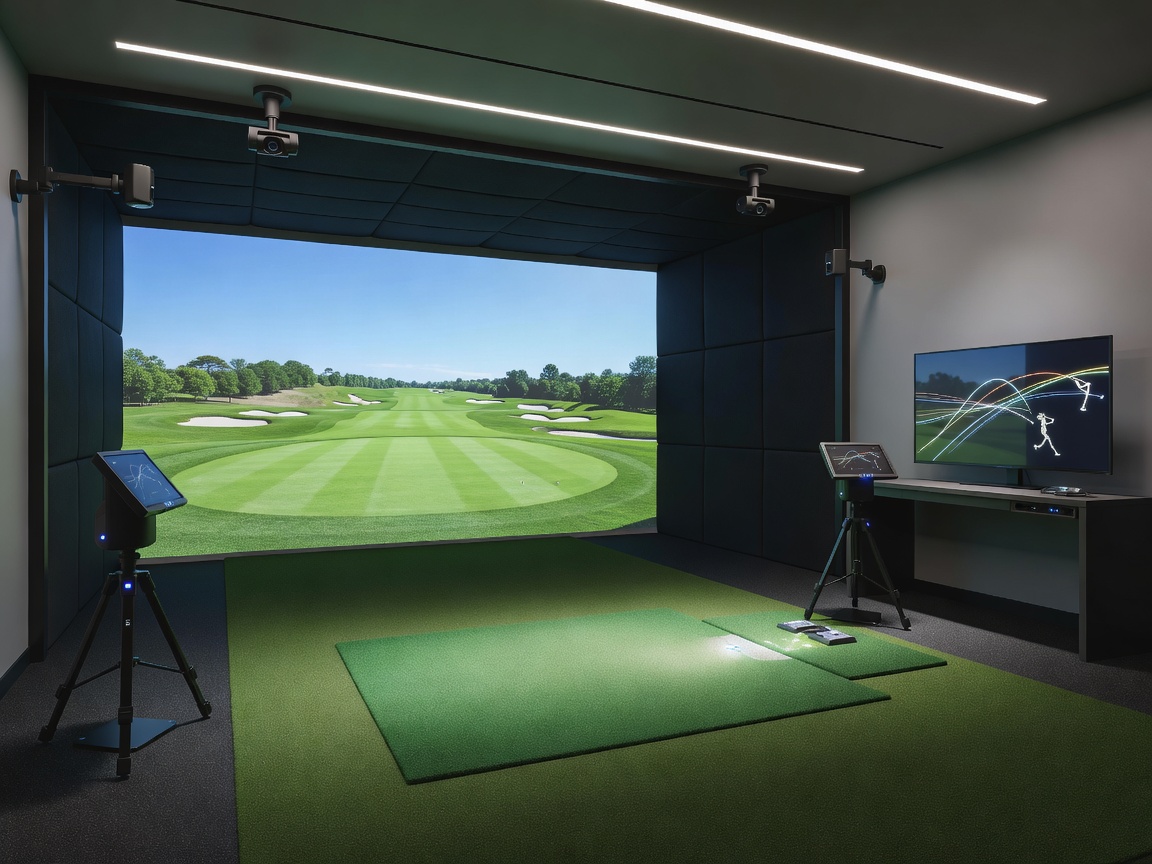
Configure the Indoor Environment
Because physical access to outdoor courses is obstructed by snow cover for a significant portion of the year, the structural model shifts entirely to indoor simulator environments. This is not treated as a compromise, but as a deliberate phase of isolated mechanical refinement.
Configure the simulator bay to remove environmental variables (wind, elevation changes, lie angles). The objective is to isolate the swing mechanics and produce a repeatable, measurable baseline.
Analyse Bio-Mechanical Measurement
The instructional procedure relies heavily on quantitative feedback rather than qualitative feel. You must track specific telemetry outputs to identify swing faults.
2.1 Assess the 'Club Path' metric to determine the direction the club head is moving relative to the target line at impact.
2.2 Assess the 'Face Angle' metric to determine the orientation of the club face relative to the club path.
2.3 Instruct the participant to make micro-adjustments to grip or posture, and immediately review the subsequent telemetry to verify if the intended mechanical change was achieved.
2.4 Repeat this process iteratively until the desired parameters fall within the target variance thresholds.
Implement Physical Conditioning Protocols
Generating high club head speeds requires specific physical capacities. The framework integrates golf instruction directly with general physical preparedness.
During the indoor training phase, mandate concurrent strength and conditioning sessions. Focus on core stability, rotational mobility, and ground reaction force generation. Measurements from these physical assessments must be correlated with changes in simulator telemetry to confirm that physical gains are successfully translating into increased mechanical output.
Execute Course Management Translation
As the transition to the outdoor phase approaches, the instructional focus shifts from mechanics to application.
Utilise simulator software to replicate specific course layouts. Instruct the participant to dictate strategy aloud, detailing target selection, wind compensation, and risk assessment before executing the shot. This procedure solidifies cognitive processing routines, ensuring that the mechanical consistency developed indoors can be deployed effectively under the cognitive load of navigating a physical course.