Football Development Structure
This module establishes the procedural mechanisms utilised to delay specialisation in association football, thereby increasing long-term retention rates among youth participants.
Understand the Deferment of Competition
The primary mechanism in the base phase is the total removal of formalised league tables and documented match outcomes. Proceed through the following logical sequence to understand the benefit:
1.1 Identify that early physical maturation heavily influences match outcomes in the initial stages.
1.2 Recognise that systems rewarding early physical dominance frequently discard late-maturing individuals who may possess superior technical ceilings.
1.3 Remove the incentive for coaches to select physically dominant teams by eliminating league tables.
1.4 The resulting environment forces coaching focus onto equal distribution of minutes and technical skill acquisition across the entire cohort.
Evaluate the Volunteer Coaching Matrix
Unlike commercial academy systems which employ early selection to justify professional coaching fees, the community model relies on a dense network of parent-volunteers. To maintain instructional quality without professionalising the base phase, governing bodies issue standardised instructional manuals.
To implement this in a comparative system, you must require all volunteer personnel to complete a mandatory certification phase. This phase does not focus on tactical instruction, but rather on pedagogical methods for managing large groups, ensuring maximum ball contact time, and conflict resolution.
Transition to the Secondary Phase
At a defined chronological threshold, the structural rules transition from the base phase to the youth phase. It is at this juncture that formalised scoring is introduced.
You must note that the transition requires careful load management. Individuals are often participating in secondary winter disciplines concurrently. The operational standard requires football coaches to consult with the participant's winter sport instructors to calibrate total weekly training volume, preventing overload injuries.
Facility Integration and Repetition Volume
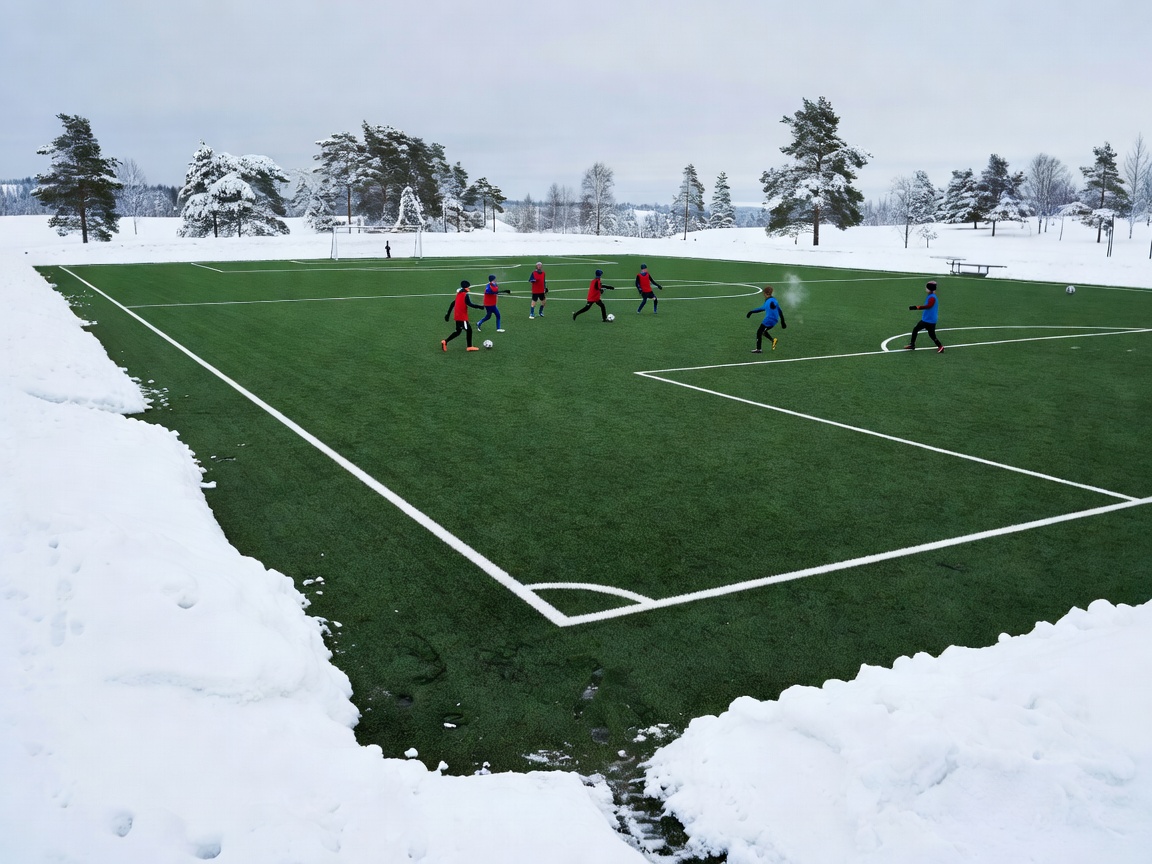
Technical acquisition requires high-volume repetition. Environmental constraints previously limited this volume during winter months. The systematic deployment of community-funded, synthetic indoor and heated outdoor pitches functions to solve this mechanical problem.
When assessing a region's output, measure the ratio of all-weather, accessible surfaces to the youth population, rather than measuring the number of professional academies. The decentralised provision of facilities allows unstructured, self-directed play to occur alongside formal training schedules, which is essential for creative technical development.