Understanding the Multi-Sport Progression Framework

Step-by-step documentation of the structural methodologies facilitating broad-based athletic development prior to specialisation.

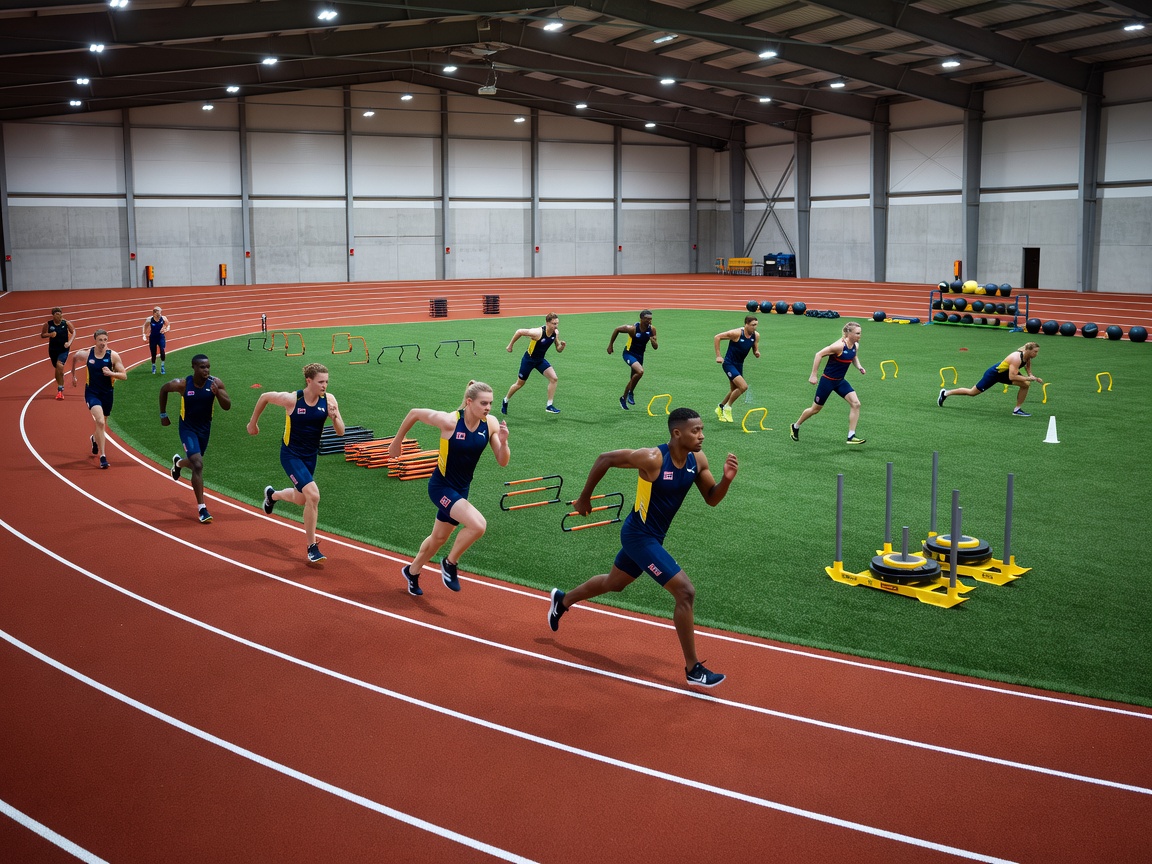
Athletes engaging in structured multi-sport training inside a vast indoor athletics facility with running tracks and synthetic turf
Fig 1.1 — Integrated indoor facilities support year-round conditioning across disciplines.
Base Phase
Participation Focus

Module 1: Football Development Structure

Examine the procedural rules governing grassroots participation, specifically the deferment of competitive scoring and league tables in the initial stages of technical development.

Indoor Environment
Mechanics Focus

Module 2: Tennis Progression Pathways

Review the sequential process of developing racket skills within community-owned indoor facilities, focusing on bio-mechanical efficiency over early competitive outcomes.

Data Capture
Translation Focus

Module 3: Golf Training Mechanics

Analyse the integration of launch monitor technology and winter indoor practice routines as a primary method for refining swing kinematics before outdoor application.

Aerobic System
Transfer Focus

Module 4: The Winter Sports Foundation

Determine how cross-country skiing acts as a foundational aerobic capacity builder, generating physiological adaptations that transfer to summer endurance disciplines.

Threshold Testing
Load Focus

Module 5: Sports Science and Testing

Understand the standard operating procedures for lactate testing, volume tracking, and intensity control utilised across national development centres to prevent overtraining.

Procedure for Evaluating the Structural Model

The framework examined across these modules operates on a sequential logic. Prior to reviewing specific technical disciplines, it is necessary to establish the foundational rules.

Rule 01

Define the primary objective

The system prioritises mass retention over early identification. By maintaining a broad base of active participants through adolescence, the statistical probability of yielding high-capacity individuals increases in the late development phase.

Rule 02

Assess cost barriers

Community regulation of facility access and club fees ensures that specialised indoor training environments remain available across socioeconomic boundaries, rather than operating on a commercial academy model.